Neck & Back Pain Care
Advanced Neck & Back Pain Treatment at DakshinRehab
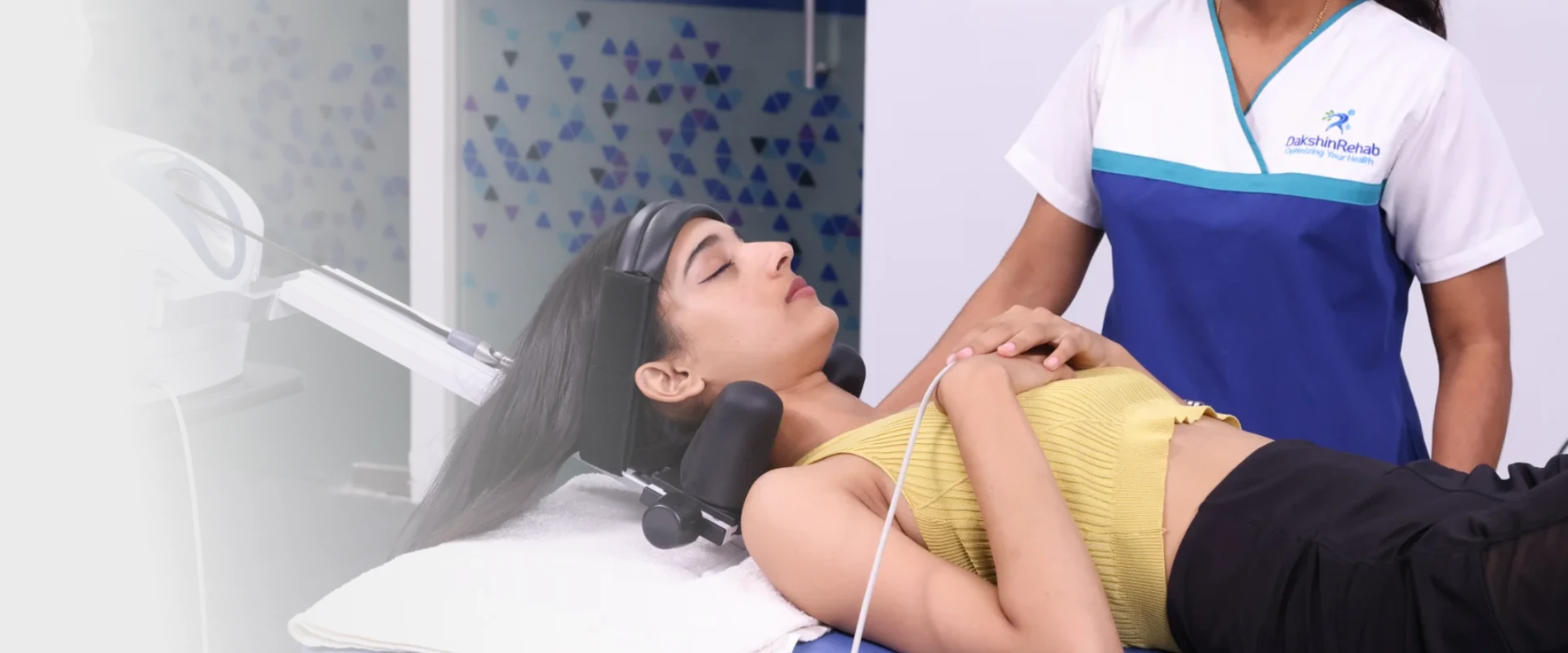
What is chronic neck and back pain? Chronic neck and back pain persists for 12+ weeks, affecting daily activities, work, and quality of life. Problem: Chronic neck and back pain controls your life. Every movement hurts. Sitting, standing, even sleeping—nothing brings relief. You've tried everything: painkillers, rest, basic therapy. Nothing works long-term. Agitate: The constant ache that won't let you focus. The fear that surgery is your only option. The frustration of being limited by pain. The worry that this will get worse, not better. What is non-surgical spinal decompression? Non-surgical spinal decompression gently unloads the spine to lower disc pressure and calm irritated nerves. How does DTS technology work? At DakshinRehab Moosapet, Hyderabad, we use computer-controlled Chattanooga DTS (Dynamic Traction System) technology that creates precise pull-relax cycles and negative intradiscal pressure, promoting disc healing and nerve decompression. What makes our approach different? Our comprehensive program combines DTS decompression with Redcord Neurac core activation, EMG biofeedback, and postural retraining for lasting relief from disc herniation, sciatica, degenerative disc disease, and chronic neck/back pain—without needles, anesthesia, or downtime. No surgery. No injections. Just relief that lasts. Your pain-free future starts here.
Our Comprehensive Approach
- Treats disc herniation, bulge, and sciatica
- Computer-controlled traction with safety stops
- Precise angle targeting for affected levels
- Gentle pull-relax cycles to prevent guarding
- No surgery, no injections, no downtime
- Paired with Redcord deep core activation
- EMG biofeedback for motor control
- McKenzie-inspired mobility work
- Ergonomic coaching and postural retraining
- Functional strength for long-term resilience
"Typical session: 15-20 minutes on the DTS table followed by targeted activation and mobility work. Most plans include 12-20 visits over 4-8 weeks, adjusted to your symptoms and goals."
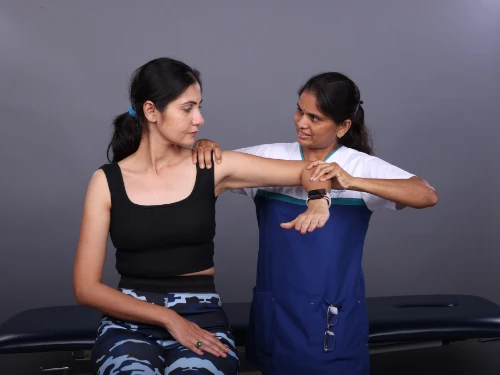
Our Neck & Back Pain Treatment Protocol
DakshinRehab's comprehensive spine care protocol combines advanced DTS spinal decompression with Redcord Neurac activation, manual therapy, and patient education to address root causes of disc-related pain and achieve lasting functional recovery.
Assessment & Diagnosis
Comprehensive clinical examination with movement testing, MRI/imaging review, and postural analysis to identify disc pathology, nerve involvement, and biomechanical dysfunctions. We confirm candidacy for spinal decompression and create a personalized treatment plan with clear functional goals.
DTS Spinal Decompression
Computer-controlled Chattanooga DTS traction creates negative disc pressure using programmed pull-relax cycles and precise angle targeting. Sessions are gradually progressed over 4-8 weeks (15-20 minutes per session) with real-time monitoring and adjustments based on your response and symptom improvement.
Activation & Stabilization
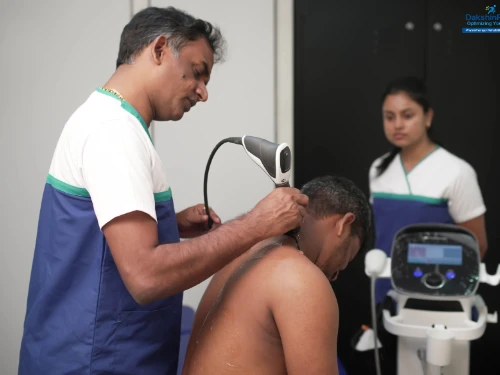
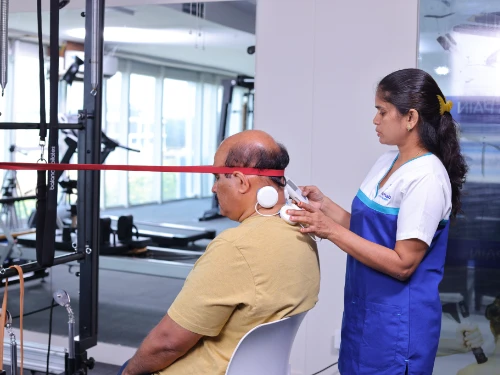
Concurrent Redcord Neurac exercises target deep spinal stabilizers (multifidus, transverse abdominis) to prevent re-injury. EMG biofeedback guides motor control retraining. Manual therapy addresses muscle guarding, joint restrictions, and mobility deficits. Learn proper body mechanics and ergonomics for spine health.
Maintenance & Prevention
Gradual return to full activities with progressive loading and a structured home exercise program. Periodic check-ins ensure sustained results. We provide flare-up management strategies, activity pacing techniques, and lifestyle modifications to maintain disc health and prevent future episodes.
Spinal Decompression Treatment Phase Progression
Our structured spinal decompression program progresses through four distinct phases—pain relief and disc unloading, rehydration and motor control, stabilization and functional strength, and long-term maintenance—to ensure complete recovery, restore function, and prevent recurrence of disc-related symptoms.
Phase 1: Pain Relief & Disc Unloading (Weeks 1-2)
Goal: calm nerve irritation, reduce intradiscal pressure, and break muscle guarding. Gentle intermittent traction cycles (60s hold/30s rest) with angle bias toward affected level. Force: lumbar 25-40% body weight, cervical 10-15% body weight. Paired with Redcord low-load deep core breathing, pelvic control, directional-preference mobility, and cryo/IF modalities as needed. Frequency: 2-3x/week.
Phase 2: Rehydration, Mobility & Motor Control (Weeks 2-6)
Goal: sustain disc unloading while restoring segmental mobility and neuromuscular control. Progress hold time and force (lumbar 30-50% BW, cervical 15-20% BW), refine angles for targeted levels. Add Redcord Neurac progressions for multifidus/transversus, hip-hinge patterning, gluteal activation. Use EMG biofeedback when indicated. Frequency: 2-3x/week.
Phase 3: Stabilization & Functional Strength (Weeks 4-8)
Goal: wean table time while building load tolerance and resilience. Lower decompression frequency (1-2x/week) or shorter sessions as symptoms permit. Add progressive anti-rotation work, carries, posterior-chain loading, step-downs/split squats. Integrate posture and ergonomic drills for work/home. Focus on functional movement patterns.
Phase 4: Maintenance & Flare-Up Plan (As Needed)
Goal: maintain results and manage episodic flares early. Transition to home program: mobility + strength schedule, activity pacing, sleep hygiene. Optional periodic booster sessions for high-demand activities or seasonal flares. Long-term: independent self-management with clinic check-ins as needed to prevent recurrences.
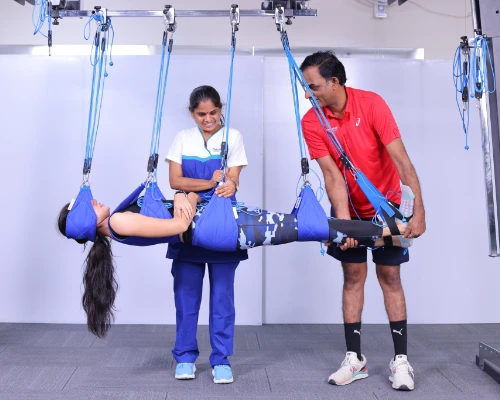
Why DTS Decompression + Exercise Works
Disc herniation or bulging compresses spinal nerves, causing back/neck pain, sciatica, arm pain, numbness, and weakness. Chattanooga DTS spinal decompression creates negative intradiscal pressure through computer-controlled traction, drawing herniated material toward the disc center and allowing nutrient-rich fluid to enter. This accelerates healing while relieving nerve compression. However, decompression alone is temporary—lasting relief requires restoring deep stabilizer coordination and global strength. Redcord Neurac's closed-chain, pain-free activation helps switch on inhibited muscles so you keep the gains made on the DTS table. Clinical studies show 70-85% of patients achieve significant pain reduction and improved function with decompression plus exercise.
Example:
Clinical evidence: Patients with lumbar disc herniation treated with DTS decompression plus core stabilization show 75-80% pain reduction and improved disability scores after 6 weeks, with sustained results at 1-year follow-up. Early intervention prevents progression to surgery in most cases.


Our Serving Areas
We proudly serve patients from the following areas within a 5km radius of our clinic
5km Radius
From ARD Magnum
Moosapet, Hyderabad
Convenient Location
All areas listed are within a 5km radius of our clinic at ARD Magnum, Moosapet. We also provide home physiotherapy services throughout Hyderabad for patients who prefer in-home care.
Frequently Asked Questions
Common questions about non-surgical spinal decompression treatment at DakshinRehab Hyderabad