Assessment & Analysis Technology
Precision Diagnostics for Smarter Rehabilitation
What is comprehensive movement assessment? Comprehensive movement assessment uses objective technology to measure movement patterns, muscle function, and biomechanical faults that drive pain and injury. Problem: You're stuck in a cycle of pain and re-injury. Traditional assessments miss the root cause. You've tried treatments that didn't work because they weren't targeting the real problem. Agitate: The frustration of not knowing why you're in pain. The fear that you'll never fully recover. The wasted time and money on treatments that miss the mark. The worry that this will get worse. What technologies do we use? Solution: Stop guessing, start measuring. At DakshinRehab Moosapet Hyderabad, our comprehensive assessment technology suite combines InBody-270 body composition analysis, Auptimo 3D gait and GaitScan pressure mapping, MyoPlus 4 EMG neuromuscular testing, and MAT functional movement screens to reveal the root causes of pain, injury risk, and performance limits. What is 3D gait analysis? 3D gait analysis measures walking and running patterns to identify asymmetries, compensations, and biomechanical faults. What is EMG biofeedback? EMG (electromyography) biofeedback reveals muscle activation timing, coordination deficits, and selective motor control issues. How does assessment improve outcomes? This integrated diagnostic pathway provides objective data that guides personalized treatment plans, tracks progress with precision, and ensures safe return-to-sport or daily activity—replacing subjective observation with evidence-based measurement. Know exactly what's wrong, target it precisely, and see measurable progress. Your path to recovery starts with clarity.
Why Assessment Technology Drives Better Outcomes
- InBody-270 body composition analysis
- Segmental muscle mass and fat distribution
- 3D gait analysis (Auptimo walking/running)
- GaitScan plantar pressure mapping
- MyoPlus 4 EMG biofeedback and timing
- Wireless EMG for functional task analysis
- MAT functional movement screening
- Limb Symmetry Index (LSI) hop testing
- Multi-directional reach and lunge tests
- Grip strength and muscle meter testing
- Objective progress tracking every 2-4 weeks
- Evidence-based return-to-sport criteria
"Assessment pathway: Initial screening → Body composition baseline → Gait and pressure analysis → EMG neuromuscular evaluation → Functional movement testing → Data synthesis and treatment plan. Re-test every 2-4 weeks to refine interventions and confirm progress toward your goals."
Our Comprehensive Assessment Protocol
DakshinRehab's evidence-based assessment protocol follows a logical clinical sequence—from body composition and movement analysis to neuromuscular evaluation and functional testing—to identify root causes, quantify deficits, guide treatment selection, and track progress with objective data throughout your rehabilitation journey.
Initial Screening & Body Composition
Comprehensive history and physical examination to understand symptoms, goals, and medical background. InBody-270 body composition analysis establishes baseline skeletal muscle mass, body fat percentage, segmental distribution (limb-by-limb), and water balance to guide loading targets, track muscle atrophy or gains, and contextualize swelling. Quick, non-invasive test provides detailed printout for comparison over time.
Movement & Gait Analysis
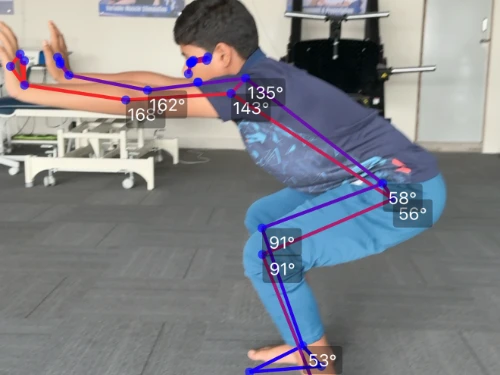
3D gait analysis (Auptimo) captures multi-camera video of walking and running to quantify posture, cadence, stride length, foot strike patterns, and joint loading. GaitScan plantar pressure mapping provides high-resolution pedobarography showing hot-spots, timing, and asymmetries during stance and gait. Together these reveal biomechanical faults (excessive pronation, crossover gait, trendelenburg, overstride) driving pain or injury risk and guide footwear, orthotics, and movement retraining.
Neuromuscular Assessment with EMG
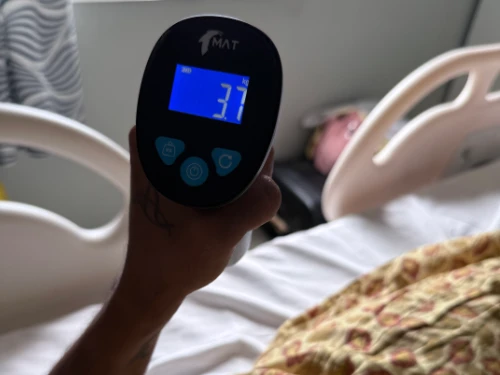
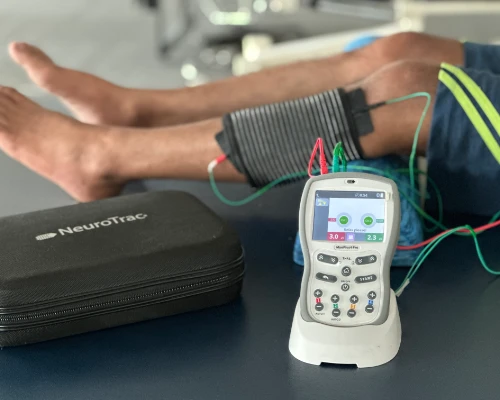
MyoPlus 4 surface EMG biofeedback evaluates which muscles are firing, when they activate (onset timing), how strong the contraction is (amplitude), and whether abnormal co-contraction or compensation patterns exist. Critical for stroke/SCI patients (selective activation, symmetry) and orthopedic cases (quad inhibition post-ACL, scapular timing in shoulder pain). EMG-triggered stimulation (ETS) and NMES modes available to facilitate retraining during functional tasks.
Functional Movement Testing & Planning
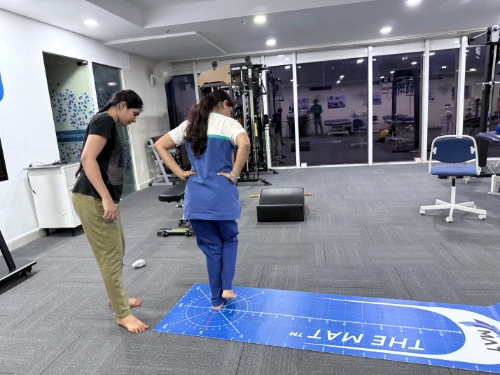
MAT functional movement assessment measures multi-directional reach, lunge distances, single-leg balance, hop performance (Limb Symmetry Index), and segmental control during common patterns (squat, hinge, step). Handheld dynamometry (muscle meter, gripper) quantifies strength. Data synthesis integrates all findings to create personalized treatment plan with clear milestones, exercise progressions, and re-test schedule (typically every 2-4 weeks) to track response and adjust interventions.
Clinical Assessment Sequence & Integration
Our structured assessment protocol progresses through four integrated phases—baseline screening and body composition, movement and gait analysis, neuromuscular evaluation with EMG, and functional movement testing—to build a complete movement profile that identifies root causes, quantifies deficits, guides treatment selection, and provides objective milestones for tracking progress throughout rehabilitation.
Phase 1: Baseline Screening & Body Composition (Session 1)
Goal: establish baseline data and identify gross deficits. Comprehensive history (symptoms, goals, medical background, activity level). Physical examination (range of motion, strength screening, special tests). InBody-270 body composition: skeletal muscle mass, body fat percentage, segmental distribution (limb-by-limb), water balance, phase angle (cell health). Takes <5 minutes; provides detailed printout. Use data to set loading targets, identify atrophy, track muscle gains, contextualize swelling. Establish re-test schedule (typically 3-6 weeks for body comp).
Phase 2: Movement & Gait Analysis (Session 1-2)
Goal: quantify biomechanical patterns and identify movement faults. 3D gait analysis (Auptimo): multi-camera capture of walking and running; measure posture, cadence, stride length, step width, foot strike (heel/midfoot/forefoot), joint angles, trendelenburg, valgus/varus, overstride. GaitScan plantar pressure mapping: high-resolution pedobarography showing foot loading hot-spots, timing (heel-to-toe rollover), asymmetries, peak pressure zones. Synthesis: link gait faults to symptoms (e.g., excessive pronation → tibial rotation → knee pain; crossover gait → hip stress). Plan footwear changes, orthotic prescription, movement retraining cues, targeted exercises.
Phase 3: Neuromuscular Assessment with EMG (Session 2-3)
Goal: evaluate muscle activation patterns, timing, and coordination. MyoPlus 4 EMG biofeedback: place surface sensors on target muscles (e.g., quads, glutes, scapular stabilizers, ankle dorsiflexors). Record activation during rest, isolated contractions, and functional tasks (squat, step, reach). Analyze onset timing (milliseconds), peak amplitude (microvolts), co-contraction ratios, left-right symmetry. Identify inhibition (quad shutdown post-ACL), compensation (overactive upper trap in shoulder pain), abnormal synergy (stroke flexor dominance). Use data to prescribe EMG-guided exercises, ETS/NMES protocols, and Redcord neuromuscular retraining.
Phase 4: Functional Movement Testing & Integration (Session 3-4)
Goal: measure task performance, limb symmetry, and readiness for activity progression. MAT functional assessment: multi-directional reach (Y-balance style), lunge distances, single-leg balance (eyes open/closed), hop tests (single-leg hop, triple hop, crossover hop, 6-meter timed hop) to calculate Limb Symmetry Index (LSI). Handheld dynamometry: push/pull strength (muscle meter), grip strength (gripper). Integrate all data: body composition, gait mechanics, EMG timing, functional performance. Synthesize into treatment plan with clear milestones, exercise progressions, and re-test schedule (typically every 2-4 weeks). Establish return-to-sport or discharge criteria (e.g., LSI >90%, symmetrical gait, normalized EMG).
Why Technology-Enhanced Assessment Works
Subjective observation alone misses critical details: subtle muscle atrophy after injury, asymmetrical gait patterns compensating for weakness, abnormal muscle timing driving pain, or functional deficits limiting return-to-sport readiness. Technology-based assessment quantifies these factors objectively. InBody-270 detects 2-5% muscle mass changes that guide loading progression; 3D gait analysis measures cadence, stride, and joint angles to the degree; EMG biofeedback reveals millisecond timing differences between limbs; MAT functional tests provide Limb Symmetry Index (LSI) scores critical for discharge decisions. Research shows clinicians using objective assessment technology make 30-40% more accurate diagnoses, prescribe more targeted interventions, and achieve better patient outcomes than observation-based assessment alone. Re-testing every 2-4 weeks confirms treatment effectiveness and allows real-time plan adjustments, reducing trial-and-error and accelerating recovery.
Example:
Clinical evidence: Athletes assessed with comprehensive movement screening (gait analysis, EMG, functional testing) before return-to-sport show 40-50% lower re-injury rates compared to time-based or subjective clearance. Post-surgical patients (ACL, TKR) with objective LSI testing and segmental muscle tracking achieve functional milestones 3-4 weeks faster than standard care. Chronic pain patients with gait and pressure mapping identifying root-cause biomechanical faults report 35-45% greater pain reduction and improved function at 3 months.


Our Serving Areas
We proudly serve patients from the following areas within a 5km radius of our clinic
5km Radius
From ARD Magnum
Moosapet, Hyderabad
Convenient Location
All areas listed are within a 5km radius of our clinic at ARD Magnum, Moosapet. We also provide home physiotherapy services throughout Hyderabad for patients who prefer in-home care.
Frequently Asked Questions
Common questions about comprehensive movement assessment and diagnostic testing at DakshinRehab Hyderabad